O Trefoil da adidas retorna à Copa do Mundo após 36 anos
O Trefoil da adidas está de volta ao Campeonato do Mundo da FIFA pela primeira vez desde a Itália '90, aparecendo numa coleção de camisas de visitante de 2026 inspiradas na era em que o logótipo apareceu pela última vez no maior palco do futebol.
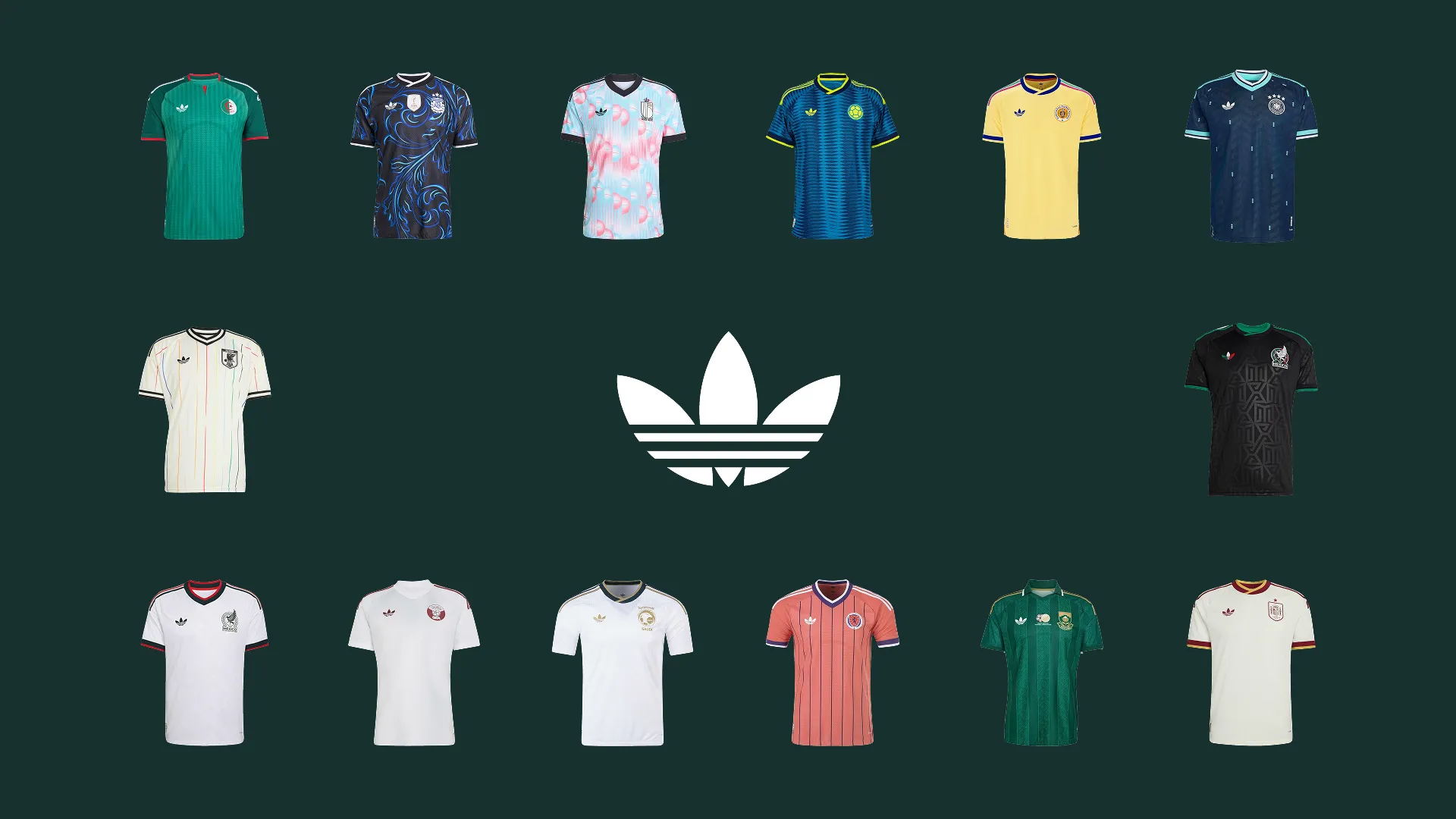
Introduzido pela adidas em 1972, o Trefoil de três folhas foi originalmente criado como um logótipo de desempenho para a crescente gama de vestuário da marca. Com o tempo, tornou-se inseparável das camisas de futebol clássicas das décadas de 1970, 1980 e início de 1990, antes de se tornar mais tarde o símbolo da adidas Originals.
Para o Campeonato do Mundo de 2026, a adidas trouxe o Trefoil de volta às camisas de jogo internacionais através da sua coleção de equipamentos de visitante. Treze nações qualificadas confirmaram camisas de visitante com o logótipo histórico, enquanto o coanfitrião México também introduziu uma terceira camisa com a marca Trefoil.
Isso significa que 14 camisas de campo confirmadas pertencentes a equipas no Campeonato do Mundo de 2026 apresentarão o Trefoil da adidas.
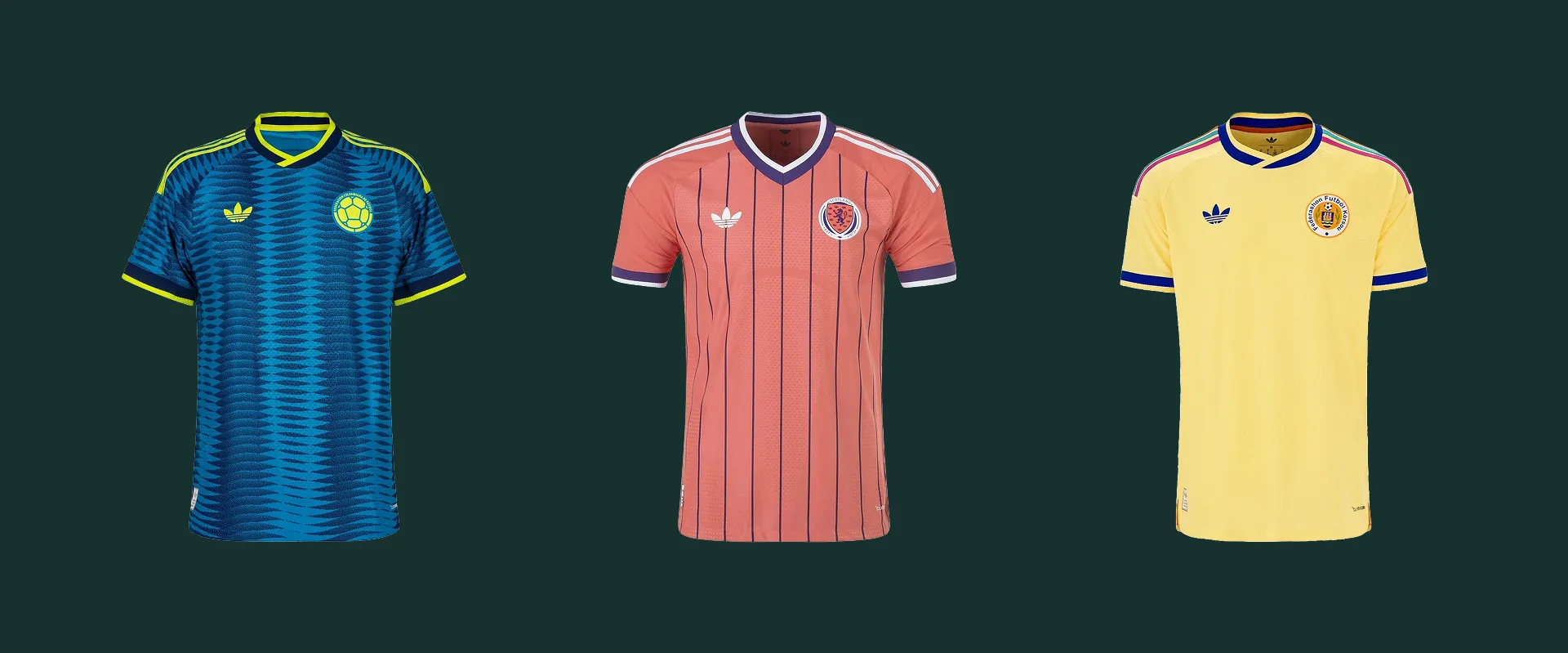
Every adidas Trefoil shirt confirmed for the 2026 World Cup
Thirteen qualified nations have adidas away shirts featuring the Trefoil for the 2026 World Cup, while co-host Mexico has also introduced a Trefoil-branded third kit.

Algeria
AwayDeep green shirt with darker sleeves, white shoulder stripes and red trim, continuing the collection’s tribute to Algeria’s varied landscapes.
View kit details →
Argentina
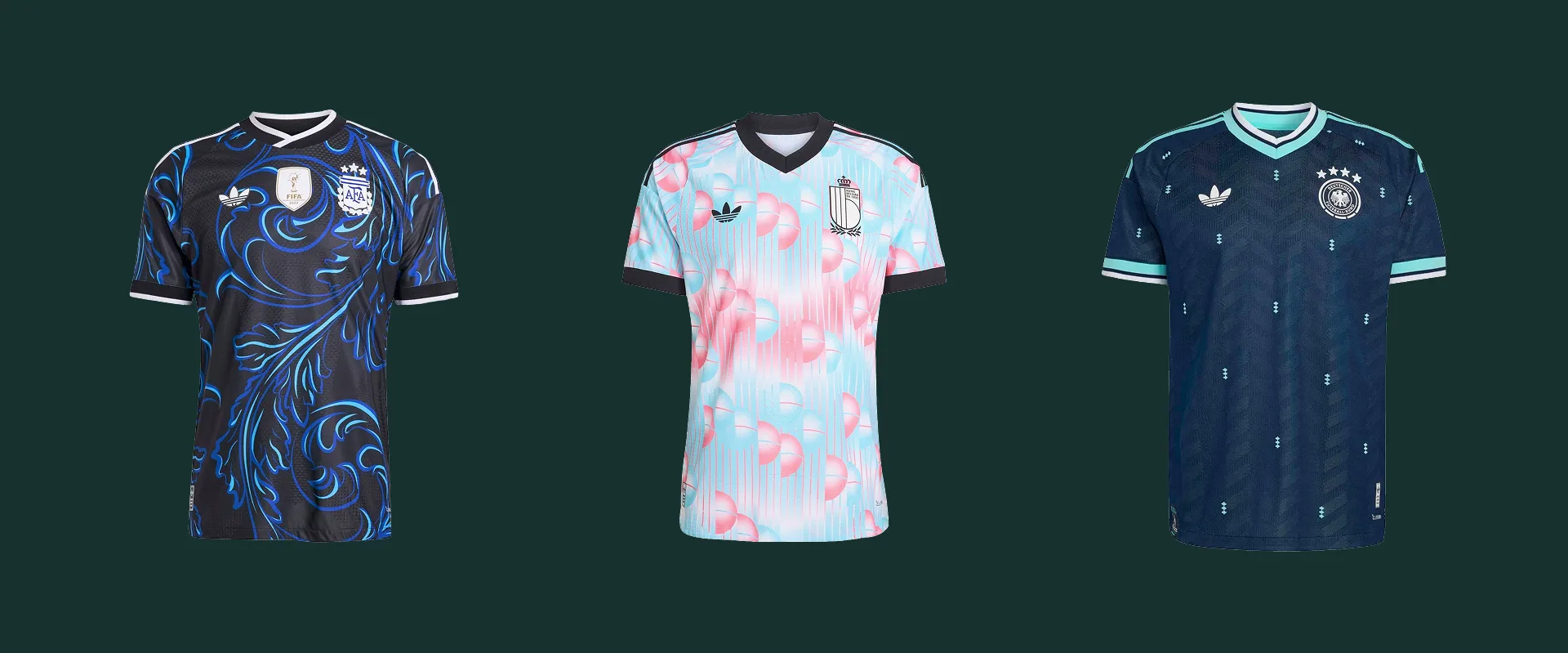
AwayBlack base with large swirling blue graphics inspired by Argentine traditional motifs, including stylised floral and climbing-plant forms.
View kit details →
Belgium
AwayPale blue and pink design paying tribute to Belgian artist René Magritte and the country’s Surrealist tradition.
View kit details →
Colombia
AwayDeep blue shirt with a darker wave-like graphic and bright yellow Trefoil details, referencing Colombia’s Caribbean and Pacific coasts.
View kit details →
Curaçao
AwayAlmost-yellow jersey with blue, turquoise, orange and pink details inspired by the colourful buildings of Willemstad.
View kit details →
Germany
AwayDeep navy design with tonal zig-zag graphics and light-blue details, referencing historic Germany adidas training tops.
View kit details →
Japan
AwayOff-white shirt with twelve coloured stripes representing the eleven players and the wider Japanese football family.
View kit details →
Mexico
AwayWhite shirt with a tonal geometric pattern, dark green and red detailing and design references to sacred geometry and ancient temples.
View kit details →Mexico
ThirdTonal “MX” patterned third shirt with a V-neck collar and “Somos México” detail. It is the only additional Trefoil outfield shirt confirmed beyond the thirteen away kits.

Qatar
AwayWhite design with maroon branding and a subtle tonal print inspired by Qatar’s sweeping desert sands.
View kit details →
Saudi Arabia
AwayWhite alternative shirt with a subtle tonal graphic, gold Trefoil branding and dark green detailing.
View kit details →
Scotland
AwayScarlet red shirt with purple pinstripes, revisiting a change colour last used by Scotland during the 1980s.
View kit details →
South Africa
AwayDeep green base with tonal vertical patterned stripes and gold detailing, continuing South Africa’s green-and-gold sporting identity.
View kit details →
Spain
AwayOff-white jersey with a pyrite-toned pattern inspired by drawings and graphic ornaments found in classic Spanish manuscripts.
View kit details →Sources: adidas World Cup 2026 Trefoil away collection and adidas Mexico third kit release .
A lista completa das nações qualificadas para o Campeonato do Mundo com camisas de visitante adidas Trefoil é Argélia, Argentina, Bélgica, Colômbia, Curaçau, Alemanha, Japão, México, Catar, Arábia Saudita, Escócia, África do Sul e Espanha. O México é a única nação atualmente confirmada com duas camisas de campo Trefoil para o torneio: os seus equipamentos de visitante e terceiro.
O lançamento mais amplo da adidas também incluiu camisas de visitante Trefoil para federações parceiras que não participarão nas finais do Campeonato do Mundo de 2026. Essas camisas fazem parte da coleção internacional mais ampla de 2026, mas não são contadas nesta lista do Campeonato do Mundo.
Porque o regresso do Trefoil em 2026 é importante
Para muitos adeptos de futebol, o Trefoil evoca imediatamente uma era específica de camisas internacionais: golas largas, gráficos geométricos, tecidos jacquard e os designs arrojados da adidas associados aos Campeonatos do Mundo antes de a marca passar para o seu logótipo de desempenho posterior.
A coleção de 2026 não se limita a colocar uma marca antiga em camisas modernas. Os seus designs mais fortes conectam deliberadamente as seleções nacionais atuais com o arquivo do Campeonato do Mundo da adidas.
A camisa de visitante preta da Argentina é um dos exemplos mais claros. Em vez de revisitar as familiares riscas azul-celeste da seleção nacional, ela usa gráficos azuis em espiral sobre uma base escura, criando uma camisa que parece moderna enquanto ostenta o mesmo Trefoil visto no equipamento principal da Argentina no Campeonato do Mundo de 1990.
A camisa de visitante da Alemanha também carrega um peso histórico incomum. O design azul-marinho faz referência a diferentes períodos do vestuário de treino adidas alemão, enquanto o Trefoil reconecta a seleção nacional com o logótipo associado ao último Campeonato do Mundo da sua era original em campo, em 1990.
As camisas do México adicionam outra camada à história. Como coanfitrião em 2026, o México tornar-se-á a primeira nação a sediar três Campeonatos do Mundo masculinos, depois de 1970 e 1986. A sua camisa de visitante usa padrões inspirados na arquitetura, enquanto o seu terceiro equipamento adiciona um gráfico tonal “MX”. Ambas ostentam o Trefoil, dando ao México a mais ampla representação do logótipo que regressa no seu torneio em casa.
A camisa de visitante da Bélgica segue um caminho diferente, inspirando-se no surrealismo e em René Magritte, em vez de um equipamento de futebol anterior. A frase “Ceci n’est pas un maillot” transforma a camisa tanto numa referência cultural quanto desportiva, ecoando o famoso desafio do artista belga ao significado das imagens.
A camisa de visitante de Curaçau é outro lançamento notável. O design amarelo pastel faz referência a Willemstad e acompanhará a primeira participação do país no Campeonato do Mundo. Para um estreante em torneios, usar um logótipo tão intimamente ligado a equipamentos históricos do Campeonato do Mundo confere à camisa uma conexão imediata com o arquivo de futebol mais amplo da adidas.
De logótipo de desempenho a ícone do futebol
O Trefoil é anterior à sua associação moderna com a adidas Originals. A adidas introduziu-o em 1972, numa altura em que a empresa se expandia para além do calçado, para o vestuário desportivo. Os seus três elementos em forma de folha foram concebidos para se destacarem claramente no vestuário, mantendo uma relação visual com as três riscas da empresa.
Dois anos depois, o Trefoil fez a sua estreia em camisas do Campeonato do Mundo no torneio de 1974 na Alemanha Ocidental. A partir desse momento, apareceu durante um dos períodos visualmente mais distintos no design de camisas de futebol internacionais.
No final da década de 1980 e no Campeonato do Mundo de 1990, o Trefoil tinha-se tornado parte da linguagem visual do futebol internacional. A Itália '90 marcaria, em última análise, a sua última aparição nas camisas de jogo do Campeonato do Mundo antes do regresso do logótipo em 2026.
Camisas icónicas do Campeonato do Mundo da era Trefoil
Camisa principal da Holanda de 1974

A camisa laranja da adidas da Holanda da Copa do Mundo de 1974 pertence ao capítulo de abertura da história do Trefoil em torneios. Usada durante a famosa campanha da equipe até a final, ela permanece associada a Johan Cruyff, ao Futebol Total e a uma das seleções mais influentes que nunca venceu o torneio.
A camisa também produziu um dos detalhes mais incomuns da história dos uniformes de futebol. Cruyff, que tinha um relacionamento pessoal com a Puma, usou uma camisa da Holanda especialmente modificada com duas listras nas mangas, em vez das três habituais da adidas.
Camisa titular da Bélgica de 1986

A camisa titular vermelha escura da adidas da Bélgica da Copa do México de 86 está intimamente ligada à histórica campanha do país até as semifinais. Sua silhueta de manga comprida e listras discretas representam um lado diferente da era Trefoil: menos geométrica do que alguns designs posteriores da adidas, mas fortemente conectada a uma campanha marcante da Copa do Mundo.
Mais de quarenta anos depois, a adidas selecionou a camisa da Bélgica de 1986 como um dos designs revividos em sua Coleção de Retorno da Copa do Mundo de 2026.
Camisa reserva da França de 1986

A camisa reserva da França de 1986 combinava uma base branca com listras vermelhas e azuis da adidas nos ombros, uma gola clássica e um Trefoil visível ao lado do escudo da FFF. É um exemplo particularmente claro de como o logotipo da adidas se encaixava na identidade da seleção nacional durante o período: reconhecível, proeminente e totalmente integrado à camisa, em vez de ser tratado como uma referência retrô.
Camisas da Alemanha de 1990
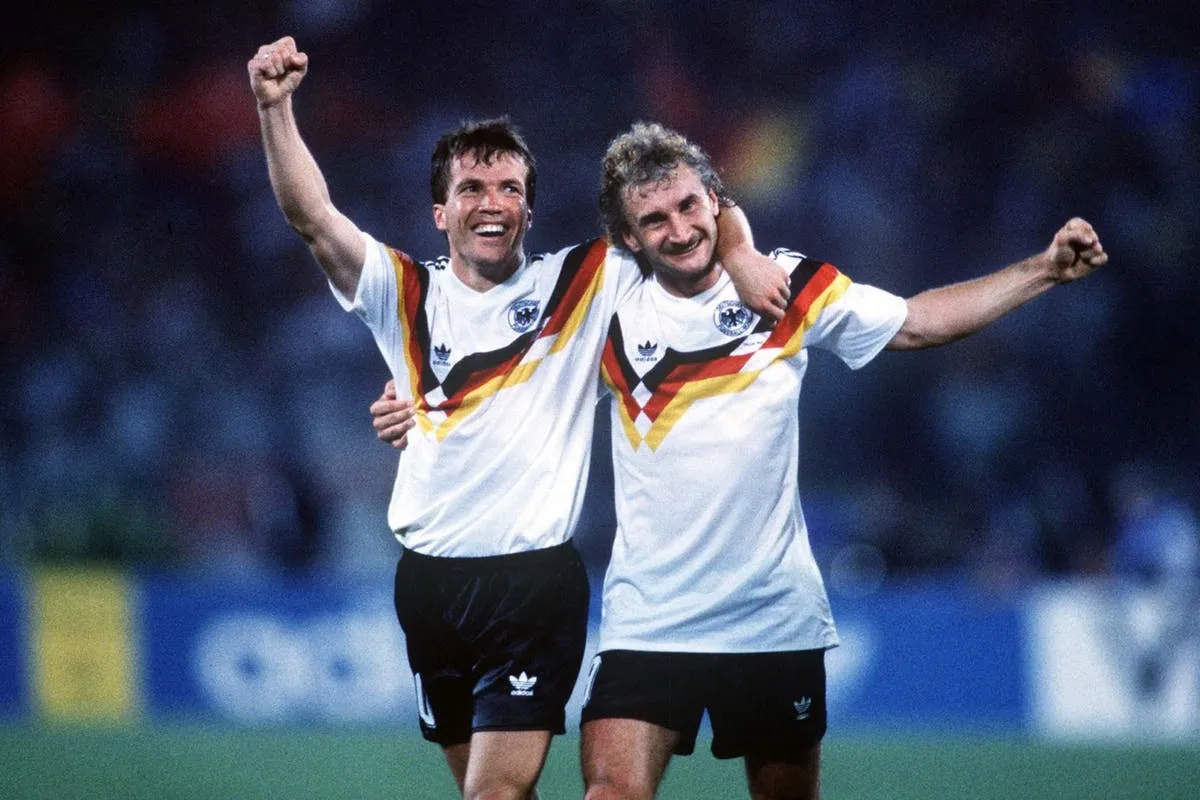
Os designs da Copa do Mundo da Alemanha de 1990 permanecem entre as camisas mais reconhecíveis que a adidas já produziu. Os gráficos geométricos em preto, vermelho e dourado usados em toda a coleção tornaram-se inseparáveis do torneio e da campanha vitoriosa da Alemanha na Copa do Mundo.
Para sua Coleção de Retorno de 2026, a adidas reviveu especificamente o design reserva da Alemanha de 1990 e descreveu seu gráfico no peito como um dos mais icônicos da marca. Essa escolha é significativa: 1990 foi a última Copa do Mundo em que o Trefoil apareceu antes de sua ausência de 36 anos do palco do torneio.
Camisa titular da Argentina de 1990
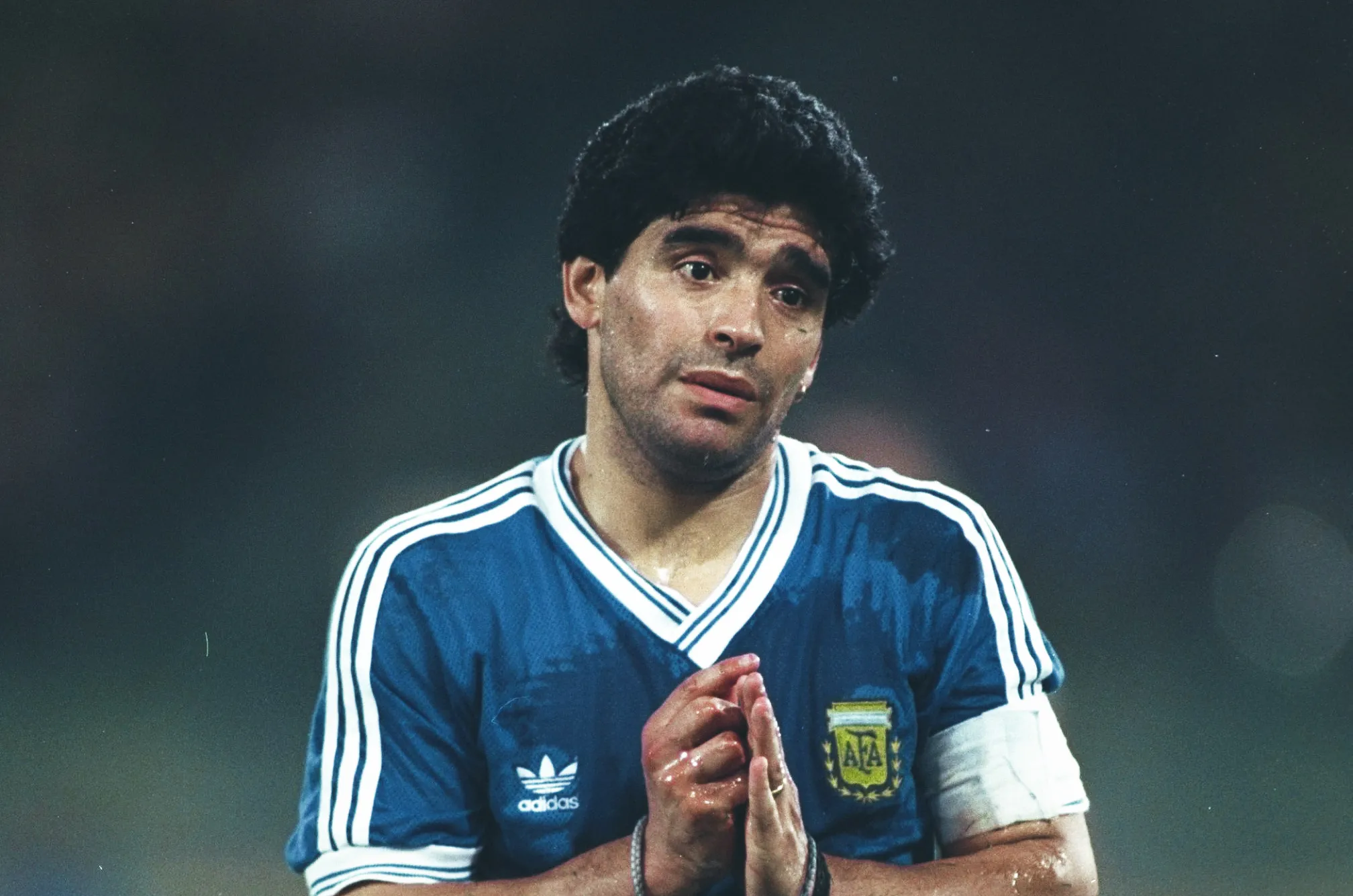
A camisa titular da Argentina de 1990 oferece uma das pontes visuais mais claras entre as antigas e as novas eras do Trefoil. A camisa apresentava as tradicionais listras azul-celeste e brancas da seleção nacional, o escudo da AFA e um Trefoil preto da adidas no peito.
Foi usada durante a campanha da Argentina até a final na Itália, tornando-a uma das últimas camisas proeminentes da Copa do Mundo a ostentar o emblema original da adidas antes de seu retorno em 2026.
Camisa titular da Holanda de 1990
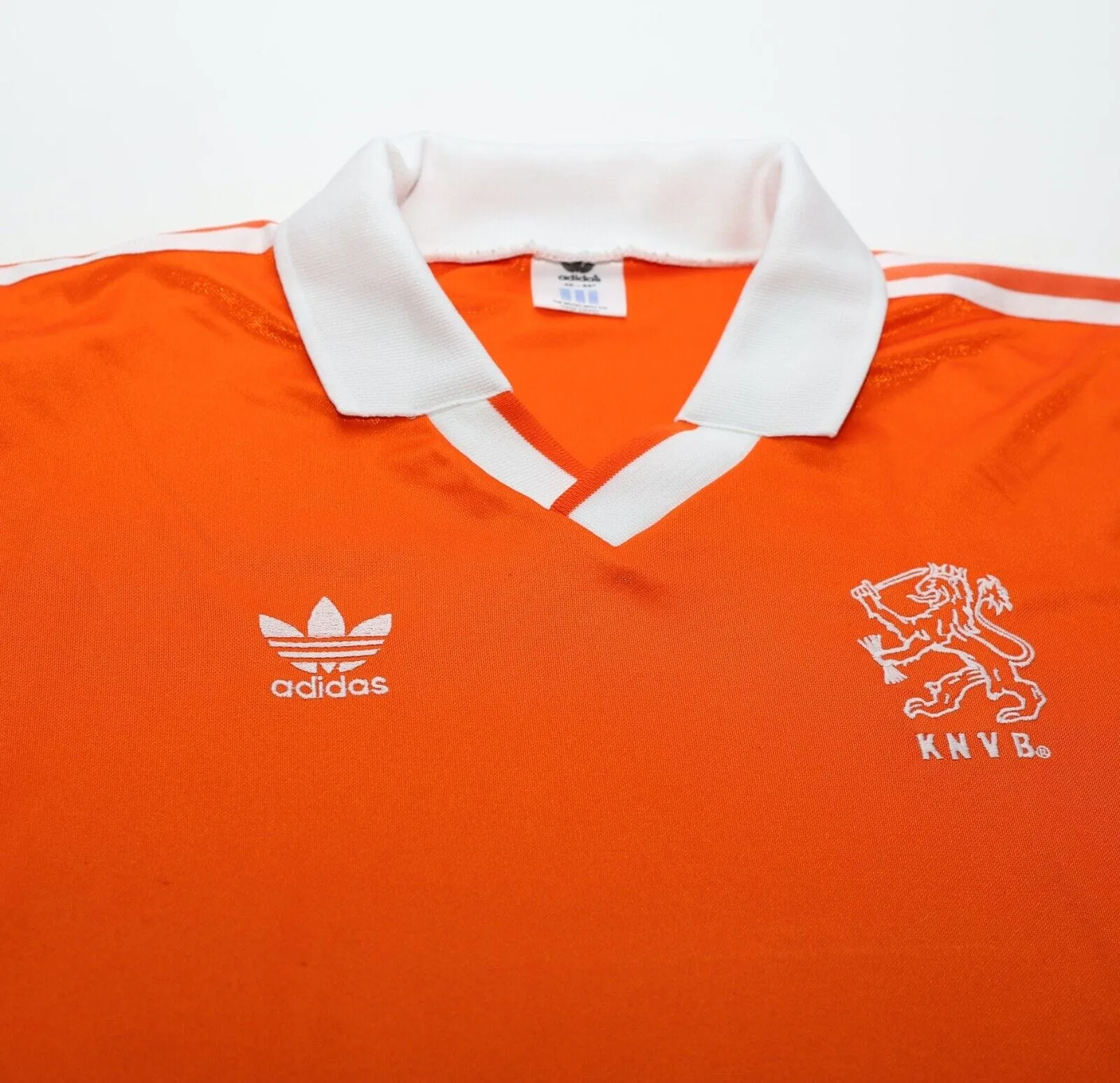
A camisa titular da Holanda de 1990 apresentou o Trefoil em uma de suas formas mais simples: uma camisa laranja brilhante com gola branca, listras brancas nos ombros, o escudo da KNVB e o logotipo da adidas no peito.
Comparado com a camisa holandesa de 1988, que tinha muitos padrões, o design de 1990 era mais contido, mas permanece significativo como parte da coleção final da Copa do Mundo da era original do Trefoil.
A bola da Copa do Mundo tem uma linha do tempo diferente para o Trefoil
A história do Trefoil na Copa do Mundo não se limita às camisas.
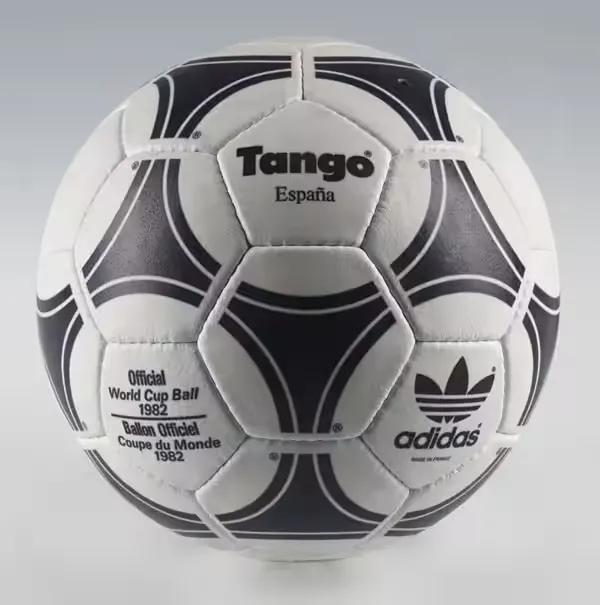
A adidas fornece a bola oficial da Copa do Mundo desde a Telstar na Copa do México de 1970. No entanto, a empresa afirma que a primeira bola da Copa do Mundo a ostentar o Trefoil foi a Tango España, usada no torneio de 1982 na Espanha.
Isso cria dois marcos separados na história da adidas na Copa do Mundo: o Trefoil apareceu pela primeira vez nas camisas da Copa do Mundo em 1974, antes de fazer sua estreia em uma bola oficial da Copa do Mundo em 1982.
Um logotipo histórico retorna em uma nova era
O retorno do Trefoil da adidas na Copa do Mundo de 2026 é mais do que uma decisão de estilo retrô. Ele reconecta os atuais uniformes internacionais com um período de design que produziu algumas das camisas mais reconhecíveis na história do torneio.
Para Argentina, Alemanha e México, o logotipo fortalece a conexão entre suas novas camisas e suas longas histórias com a adidas em Copas do Mundo. Para Curaçao, ele se torna parte de uma primeira aparição no torneio. Para Bélgica e Japão, ele fornece a base para uniformes que combinam referências culturais nacionais com a linguagem visual do passado do futebol.
Trinta e seis anos após sua última aparição em Copas do Mundo, o Trefoil está de volta às camisas internacionais. O torneio de 2026 decidirá quais desses novos designs serão lembrados ao lado dos clássicos.
Uniformes adidas Trefoil da Copa do Mundo: perguntas frequentes
Quando o Trefoil da adidas foi visto pela última vez em uma Copa do Mundo?
O Trefoil apareceu pela última vez nas camisas da Copa do Mundo na Itália ’90. Seu retorno em 2026 encerra uma ausência de 36 anos do torneio.
Quantas camisas da Copa do Mundo de 2026 apresentam o Trefoil da adidas?
Catorze camisas de campo confirmadas pertencentes a nações classificadas para a Copa do Mundo apresentam o Trefoil: treze camisas de visitante e a terceira camisa adicional do México.
Quais seleções da Copa do Mundo de 2026 têm camisas de visitante com o Trefoil?
Argélia, Argentina, Bélgica, Colômbia, Curaçao, Alemanha, Japão, México, Catar, Arábia Saudita, Escócia, África do Sul e Espanha.
O México tem duas camisas Trefoil da Copa do Mundo?
Sim. A camisa de visitante de 2026 do México e sua terceira camisa ambas carregam o Trefoil da adidas.
Quando o Trefoil da adidas foi introduzido?
A adidas introduziu o Trefoil em 1972 como um logotipo de vestuário de performance. Mais tarde, ele se tornou intimamente associado à adidas Originals.
Quando o Trefoil apareceu pela primeira vez na Copa do Mundo?
O Trefoil apareceu pela primeira vez nas camisas da Copa do Mundo no torneio de 1974. De acordo com a adidas, ele apareceu pela primeira vez em uma bola oficial de jogo da Copa do Mundo com a Tango España em 1982.